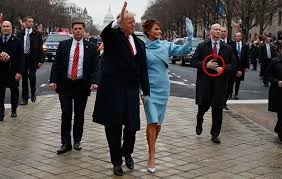
Videos freeze-framed, screenshots zoomed in, a pinky held just so—online speculation has repeatedly claimed that Donald Trump’s bodyguards hide “prosthetic arms” under loose jackets to conceal weapons. Some even point to similarities with royal protection officers around King Charles III as proof of a shared secret. It sounds dramatic. It’s also not true.
Here’s the reality—calm, procedural, and far less mysterious.
The posture you’re seeing has a name
Protective details around Trump—and around Melania Trump—often use a standardized hands-ready posture. It minimizes movement, keeps the torso square, and allows rapid access to equipment while maintaining a neutral appearance. The stiffness people notice is intentional: stillness reduces visual noise and lets agents scan crowds more effectively.
No prosthetics—just training and tailoring
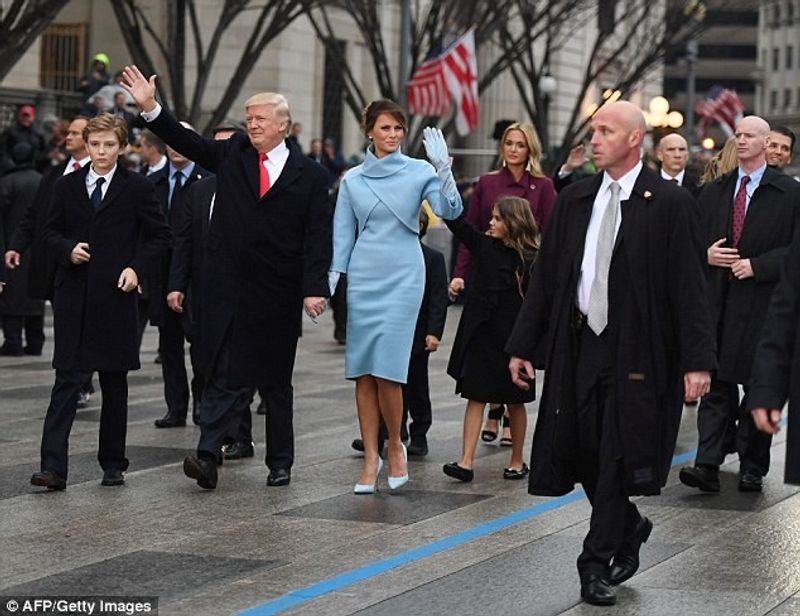
There is no credible evidence that agents sew rubber prosthetic arms into jackets. That claim doesn’t align with how close protection works or with how garments are tailored. Protective jackets are cut to hide natural arm movement, accommodate radios/earpieces, and prevent printing—not to disguise fake limbs. Agents keep real hands free, close to natural access points, and ready to react.
Why jackets look loose
Loose tailoring helps conceal equipment and prevents onlookers from reading an agent’s next move. It also allows comfort during long stands or slow marches—think parades and ceremonies—without telegraphing readiness. That’s why similar silhouettes appear across agencies and countries, including royal protection in the UK.
Why you see differences during high-risk moments
During overtly dangerous situations—like an active threat—posture changes. Agents break stillness, hands move openly, formations tighten. That shift alone undermines the prosthetics rumor: deception through fake arms would be counterproductive when seconds matter.
The real “secret” is boring—and effective
What keeps principals safe isn’t theatrical trickery. It’s discipline, repetition, and pattern control:
-
standardized stances
-
controlled movement
-
constant scanning
-
instant access to real tools, with real hands
Those techniques look odd when isolated in a clip. In context, they’re textbook.
Bottom line: the viral theory mistakes professional stillness for disguise. There’s no hidden prosthetic plot—just trained protectors doing exactly what they’re taught to do, whether beside Trump, Melania, or the British monarch.