At first glance, the announcement sounded familiar. Another sanctioned tanker. Another dramatic seizure. Another headline about Washington tightening the screws on Nicolás Maduro. Yet the moment the U.S. government confirmed the capture of the Skipper supertanker in Venezuelan waters, something felt different — heavier, sharper, more deliberate.
This was not just enforcement.
It was a message.
The Trump administration described the operation in blunt terms: the Skipper was accused of violating U.S. sanctions, moving oil on behalf of shadowy foreign networks, and actively undermining international law. Officials emphasized scale — the largest oil tanker ever seized — a phrase carefully chosen to land with force on American living-room televisions and British breakfast tables alike.
But behind the official language lies a far more unsettling story.
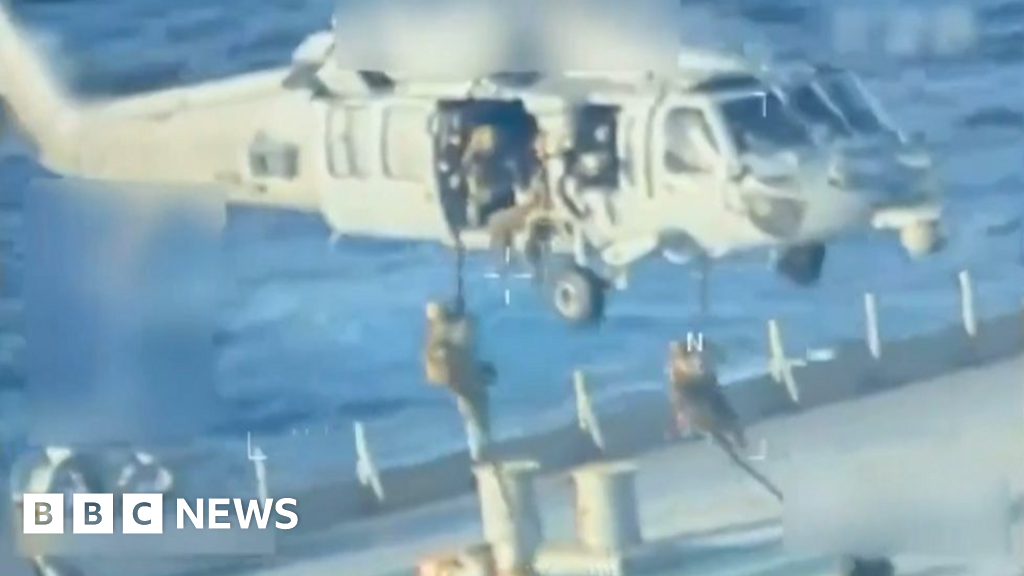
For months before the seizure, satellite imagery quietly told a different tale. The Skipper did not move like an ordinary commercial vessel. At key moments, its transponder went dark. Its reported location jumped across miles of open water. Shipping data suggested deliberate deception — the kind used not by desperate sailors, but by networks that understand exactly how global enforcement works, and how to slip through it.
This wasn’t just oil.
It was power — disguised as commerce.
To many in Washington, Venezuela’s oil industry has long represented more than barrels and pipelines. It is the last lifeline of a regime that survived sanctions, protests, and diplomatic isolation. Every tanker that slips out of the Caribbean under cover of darkness strengthens Maduro’s grip — and weakens American leverage in a region the U.S. once considered firmly within its sphere.
That is why the seizure mattered.
For older Americans and Britons who remember the Cold War, the echoes are unmistakable. This wasn’t simply about punishing a violation; it was about drawing a line in water. The Caribbean, long treated as a chessboard of influence, is once again contested space — and oil tankers have become modern-day pawns.

Venezuela’s response was swift and furious. Officials denounced the move as “international piracy,” accusing Washington of shameless theft. State television showed defiant speeches, clenched fists, and promises of retaliation. Yet behind the outrage was something else — fear. Because this seizure did not look symbolic. It looked surgical.
And Trump knew exactly how to frame it.
When he hinted publicly that “there’s more than people know,” it wasn’t idle bravado. It was a reminder of a governing style rooted in disruption and unpredictability. For supporters, it signaled strength — a president willing to act, not negotiate. For critics, it raised alarms about escalation and legality. But for everyone watching, it sparked one uncomfortable realization: the world beneath the headlines is far darker and more calculated than the press releases suggest.
This seizure also sent a quiet warning beyond Caracas. To foreign intermediaries. To shipping firms willing to look the other way. To governments that believed sanctions could be bent with clever paperwork and switched-off trackers. The era of plausible deniability, Trump seemed to suggest, was over.
What makes this story linger — especially for readers who have lived through decades of geopolitical whiplash — is not just what happened, but what it implies. If a single tanker can trigger such a dramatic show of force, what else is moving unseen across global waters? And how close are we to a moment when economic enforcement spills into open confrontation?
The Skipper was seized.
But the real target was something much larger.
Influence. Deterrence. Control.
And once you see it that way, the story becomes impossible to forget — because it isn’t about oil at all. It’s about who still gets to decide the rules of the world, and who pays the price when those rules are challenged.